

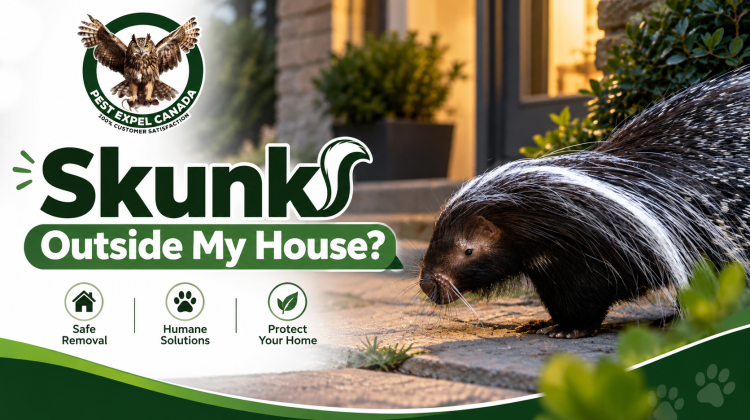
Skunk Outside My House: How to Remove It Safely
A skunk outside your house can be unsettling, especially when it feels threatened and may spray. Fortunately, most skunks prefer to avoid people and will usually move away on their own. The safest approach is to remain calm, keep children and pets indoors, and avoid approaching or cornering the animal. By understanding behavior and using gentle removal methods, you can encourage to safely learn how to eliminate skunk outside my house.
How to Know if There is a Skunk Outside My House?
Skunks are nocturnal, and you may find one of these in front of your house at night. Go outside and scout your backyard or garden, your front porch, or your trash heap to find a black and white creature with a bushy tail wandering slowly. A strong and unpleasant musky smell is also another indicator of the existence of a skunk.
Small holes in the soil might occur as well since skunks typically dig for insects and grubs. Tipped-over garbage bins, littered food, or turned over soil can also be considered major signs. When it gets dark, you can hear them scratching, digging, or rustling to determine their location. Avoid approaching an animal if they find any kind of threat from your presence.
Things to Do if you Found a Skunk Outside My House
If you find a skunk outside your house, stay calm and keep your distance. Take children and pets inside till you do not fully eliminate skunks. Do not follow, turn it around, lay hands on it, or attempt to enclose it. Provide the animal with a clear way out of your property.
Close your doors, windows and garage doors to ensure that it does not get into your home. After eliminating the skunks, remove any accessible pet food, bird food, garbage and other food sources. In the event the skunk appears injured, trapped, sick, or excessively aggressive, get the best services of a skunk control Woodbridge.
Major Reasons Why There is a Skunk Outside My House
Easy Access to Food
Skunks are generalist predators that can come to the yards where food can be readily located. Open garbage, pet food, fallen fruit, bird food, and insects are their major attractants, particularly at night when they instinctively forage.
Shelter and Hiding Places
Skunks seek isolated and secure spots where they can sleep and remain secure. Suitable shelter can be found in spaces under decks, sheds, porches, stairs, and buildings. An immediate shelter can motivate a skunk to stay in your yard.
Water Availability
A dependable water source has the potential to attract wildlife, such as skunks. Outdoor taps that leak, standing water, pet bowls, ponds, and poorly drained areas can be a source of drinking water. Skunks might pay more frequent visits to your yard when food and water are provided together.
Searching for Insects
Skunks tend to burrow through the soil in the process of finding insects, grubs, worms, and other small food items. If the population of insects in your lawn is large, then a skunk can be a frequent visitor. This activity can be denoted by small cone-shaped holes or patches of soil that have been disturbed.
Quick Measures on How to Remove Skunk Outside My House
Removing all Kinds of Food Sources
Try to remove pet food, bird food, dropped fruit, and litter that is available. Use trash containers that have tight-fitting lids. By eliminating sources of easy food, your property will be less desirable, and this will make the skunk relocate to other places on its own.
Keep Your Pets Indoors
Take dogs and cats inside when the skunk is around. Interested pets can go up to, scare, or trap the animal, and the animal is more likely to spray defensively. Do not take pets outside until the skunk has been safely moved out of the way.
Give It an Escape Route
Do not obstruct or encircle a skunk. Rather, send away people and animals and create a clear path to a peaceful space. Skunks mostly avoid conflicts and can go away themselves when they are not threatened.
Secure Potential Shelter
Access to areas underneath decks, sheds, porches, and other buildings, after ensuring that no animal is inside. Install robust fences or netting that can be used to keep away wildlife. Do not close a hole when a skunk might still be there.
Reduce Yard Attractants
Have a neat yard and clean up the fallen produce, spilled bird food, standing water, and other attractants. It is also possible to keep your lawn trim and minimize spaces where insects can congregate, thus making your property less attractive to visiting skunks.
Contact Wildlife Professionals
Should a skunk stay in your area, look injured, get stuck, or act abnormally, call a licensed skunk removal company in Woodbridge. Professionals will be able to evaluate the situation and suggest safe and humane ways of removal or exclusion.
FAQs: Commonly Asked Questions
1. Will a skunk attack me?
Skunks generally avoid people, but they may defend themselves when threatened, cornered, approached, or handled improperly.
2. How do I get a skunk to leave my yard?
Remove accessible food sources, keep pets indoors, provide an unobstructed exit, and avoid approaching or frightening the skunk.
3. Can I remove a skunk myself?
DIY removal can create safety and legal concerns; professional wildlife removal is preferable when skunks are denning nearby.
See a Skunk Around Your Home? Let the Professionals Help
A skunk outside your house can quickly become a stressful problem, especially when it starts digging, sheltering under a deck, or returning repeatedly. Pest Expel Canada can assess your property, identify potential entry and shelter areas, and use humane removal methods designed to address the problem safely. When unwanted wildlife becomes a recurring concern, professional help can give your home and family greater peace of mind.